Are online valuations all the same? No. How they really work, why some are more reliable than others, and how to read the result without fooling yourself.
Search for "free home valuation" and you'll find dozens of tools promising your property's value in seconds. Some are useful; others are simply bait to capture your phone number and pass it to three agencies. This guide looks at how a free online valuation actually works, why results can vary so much from one tool to another, and how to tell which to trust — without fooling yourself, and without throwing away a tool that, used well, is genuinely valuable.
How an online valuation works, under the hood
Almost every automated valuation tool — Refit.space, Immobiliare.it Stima, RealAdvisor, Casavo — does, in different forms, the same thing: it applies the comparative method at scale. It takes the characteristics you enter (address, size, floor, condition) and compares them against a large archive of data — recorded sales, listings, OMI quotations from the Agenzia delle Entrate — to estimate the most probable price.
The difference between a serious tool and a poor one comes down to three things:
- What data it uses. A model built on real sales is far more reliable than one that only looks at listing asking prices (which are, on average, higher than the actual closings).
- How up to date it is. The market moves. An archive frozen a year ago returns last year's numbers.
- How fine its geography is. "Como" isn't enough: the neighbourhood, the street, the view all matter. The best models reason by micro-zone.
Refit.space's model is a quantile model trained on Lombardy market data, refreshed twice a month, calibrated in particular for Como, Milan and Lake Como.
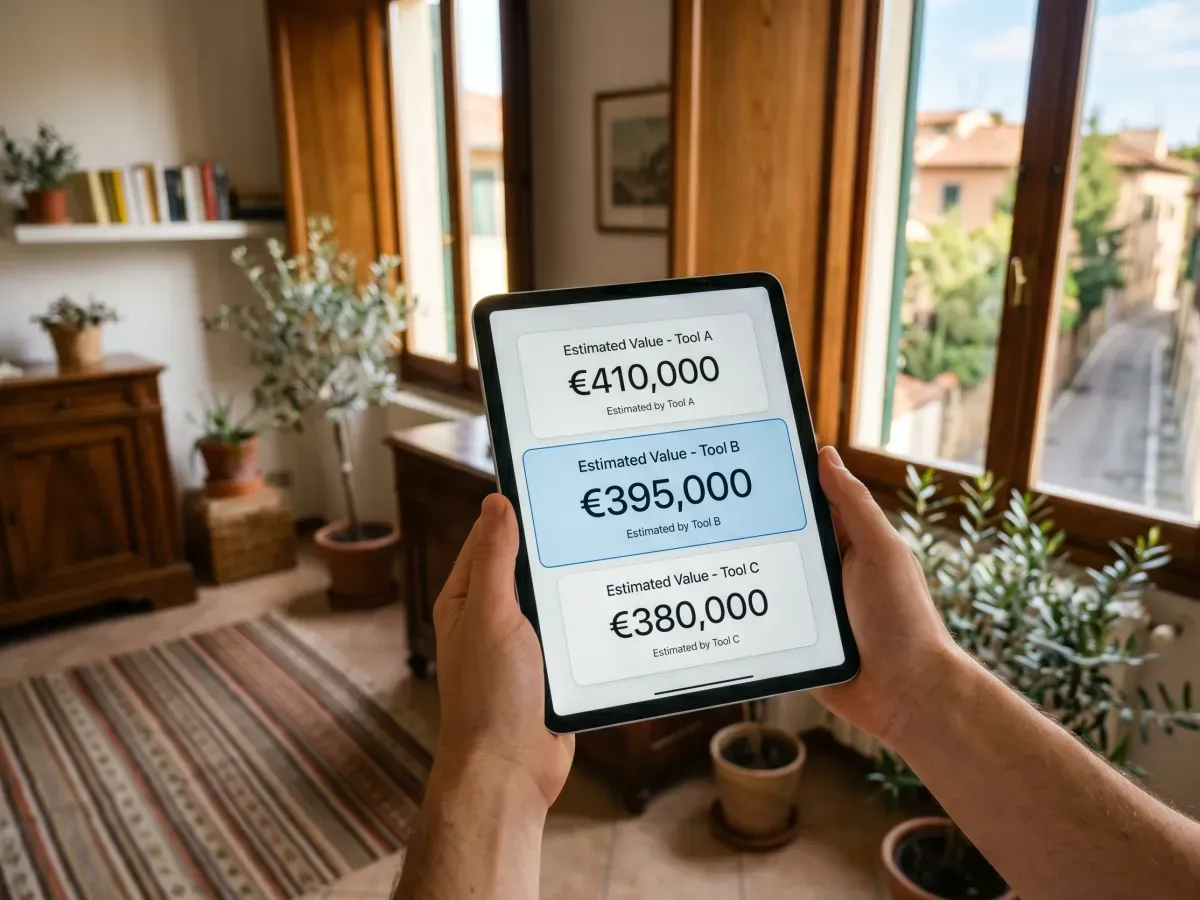
Try it now.
Enter your property's characteristics and get a realistic estimate in 2 minutes. Free, no upfront registration.
How reliable is it, really
A serious automated valuation doesn't give you a single number: it gives you a range with a stated margin. Ours, in the areas we cover best, has a typical accuracy of ±15%. On a €400,000 home that means the realistic estimate moves within a band of a few tens of thousands of euros — precise enough to decide whether and how to sell, not precise enough to sign a deed.
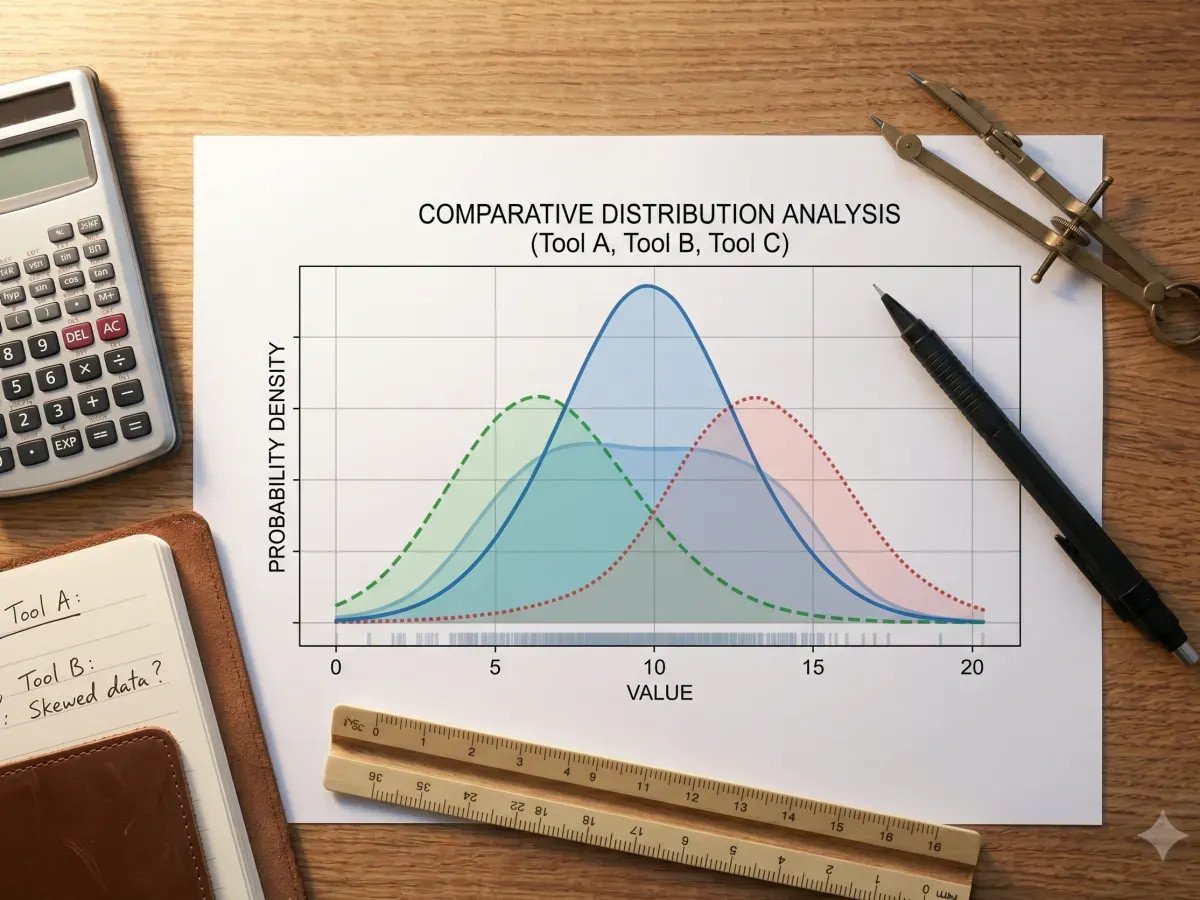
The reason for the margin is simple and honest: a model doesn't walk through the house. It doesn't see whether the bathroom was redone last year or thirty years ago, it doesn't feel the early-afternoon light on the terrace, it doesn't know the building next door has an open construction site. These details, which move the price, are caught only by an on-site inspection.
That's why an online valuation is perfect as a solid first number, and should be paired with a human check when the stakes are high. For the bigger picture — methods, factors, price bands by area — we've written a complete guide to property valuation in 2026.
When an online valuation is enough and when you need an appraisal
They're two tools for different purposes. Confusing them costs time or money.
An online valuation is enough when: you want to orient yourself, decide whether it's the right time to sell, work out whether an offer you've received is reasonable, or set a starting price to discuss with an agency.
You need a formal appraisal (perizia) signed by a qualified technician when: you need a value with legal standing — a mortgage, inheritance with the Agenzia delle Entrate, an estate division, a dispute. There, an automated number isn't admissible, however precise it may be.
The healthy sequence is always the same: the online valuation first to orient yourself for free, then — if you decide to move — a comparison with a local agency, and a formal appraisal only when a third party (bank, tax authority, judge) requires it.
Three traps to avoid
Not every "free valuation" is built to help you. Watch for these signals:
- The tool that asks for your phone before giving you the number. Often the "result" is just the hook: your details go to several agencies who will call you. A serious valuation gives you the estimate straight away.
- The single number with no range. An honest estimate is a band. A flat figure to the last euro gives a false sense of precision.
- The flattering overvaluation. If the number is far above your expectations, be wary: inflating the estimate is the oldest way to get you to sign a mandate, after which the price drifts down "along the way".
How to read the result
When you get your estimate, read it for what it is: an informed starting point, not a verdict. Three things to do right after:
- Look at the range, not just the central number. That's where the truth of the market lives.
- Compare it with your context. The real state of the property, the charges, the view, the floor: they raise or lower the estimate within (sometimes beyond) the band.
- Use it as a lever, not a limit. Today's value isn't the maximum value: with the right presentation most properties can achieve more. We've written a guide to the types of home staging on exactly this.
Find out what your home is really worth.
Free AI valuation in 2 minutes, with a value range and selling scenarios. No commitment.