Generative AI made virtual staging photo-realistic, fast and affordable. When it really works (and when it doesn't), with 2026 real costs and timelines.
Three years ago, virtual staging was still a niche technique: stiff 3D renderings, furniture that looked straight out of a 2000s IKEA catalogue, and prices that only made sense for mid-to-high-end properties. Today it's a different game entirely — and worth understanding, especially if you're selling or renting a property on Lake Como or in Milan.
What virtual staging is, concretely
You start from real photos of empty rooms (or poorly furnished ones) and digitally add furniture, decor, lighting and textiles. The output is photo-realistic imagery ready for online listings — Immobiliare.it, Idealista, agency websites, international portals for foreign buyers. The point: the buyer does NOT see the furniture in person during the viewing.
Three things that work today
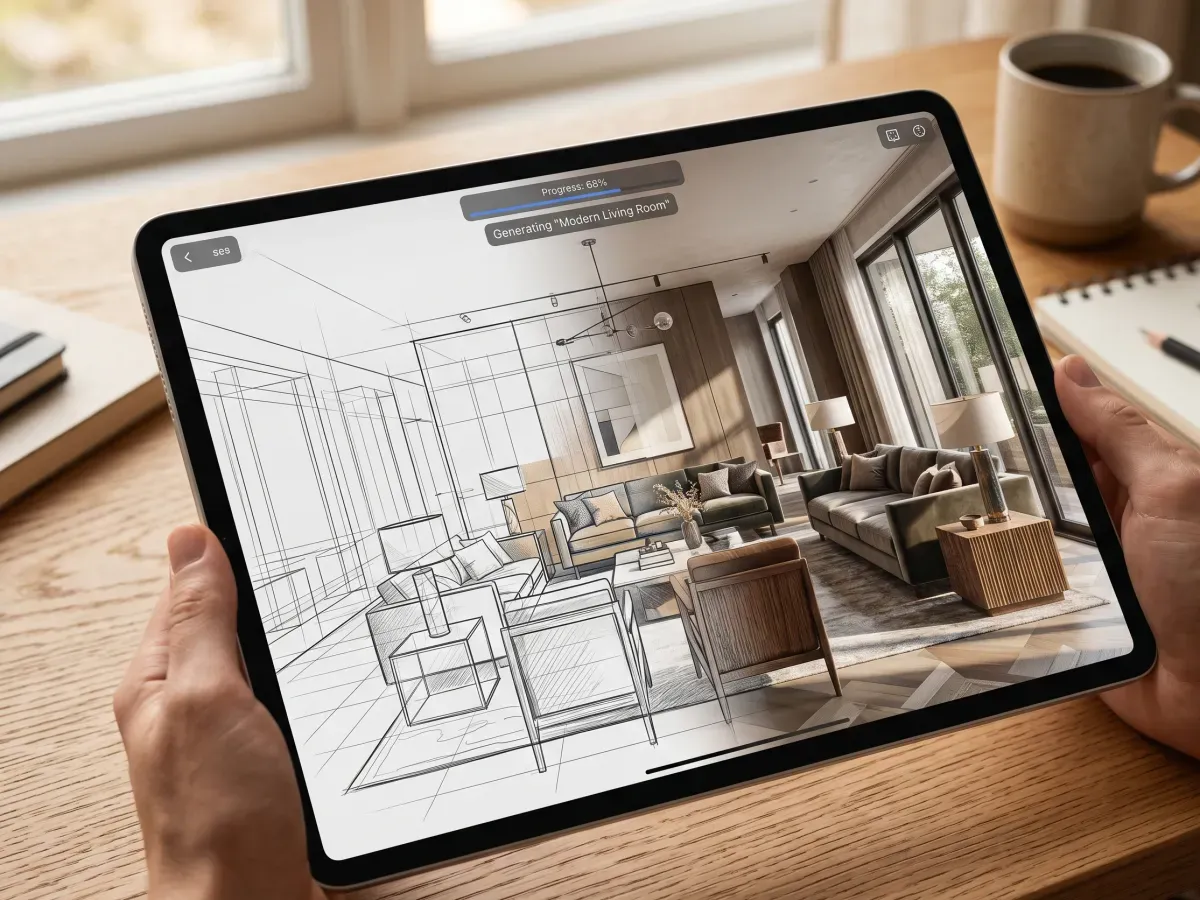
Generative AI changed the game on three fronts:
- Photo-realism: recent models (Stable Diffusion tuned for interiors, Midjourney v6+, proprietary models from a few Italian platforms) produce images that are hard to tell apart from real photos. Light bounce, shadows, floor reflections — all coherent.
- Cost crashed: 3-5 years ago €150-300 per photo with traditional CGI rendering was the norm. Today €30-80 per photo, and full projects (4-6 rooms) total €200-450.
- Speed: 24-72 hours from photo delivery. Physical staging requires weeks of planning + days of setup; virtual gets you online within 3 days.
What does NOT work
It's not magic. Three real limits to keep in mind:
- The buyer at the viewing sees the property empty. If the listing is too «beautiful» compared to reality, you lose credibility instantly.
- In Italy you have to declare images as «virtual renders» or «virtual staging» in the caption — both for legal reasons (misrepresentation) and professional ethics. Idealista and Immobiliare.it are introducing explicit policies.
- It doesn't fix structural issues. A 1970s kitchen behind a white-marble render is still a 1970s kitchen when the person walks in.
When it really makes sense
Based on our cases around Lake Como (see projects like Torno Villa or Como Centro in the projects section), virtual staging works best in these scenarios:
- Fully empty properties — inherited homes, converted offices, new constructions
- Properties to renovate where you can't intervene before listing (but clearly labelled «post-renovation»)
- Properties in secondary or hard-to-reach areas where multiple physical viewings aren't practical
- International listings where foreign buyers pre-screen on portals before traveling
How to use it well
Four practical rules that make the difference between useful virtual staging and the kind that does more harm than good:
- Start from quality base photos — high resolution, natural light, no extreme wide-angle distortion. Three good photos are worth more than ten badly taken ones.
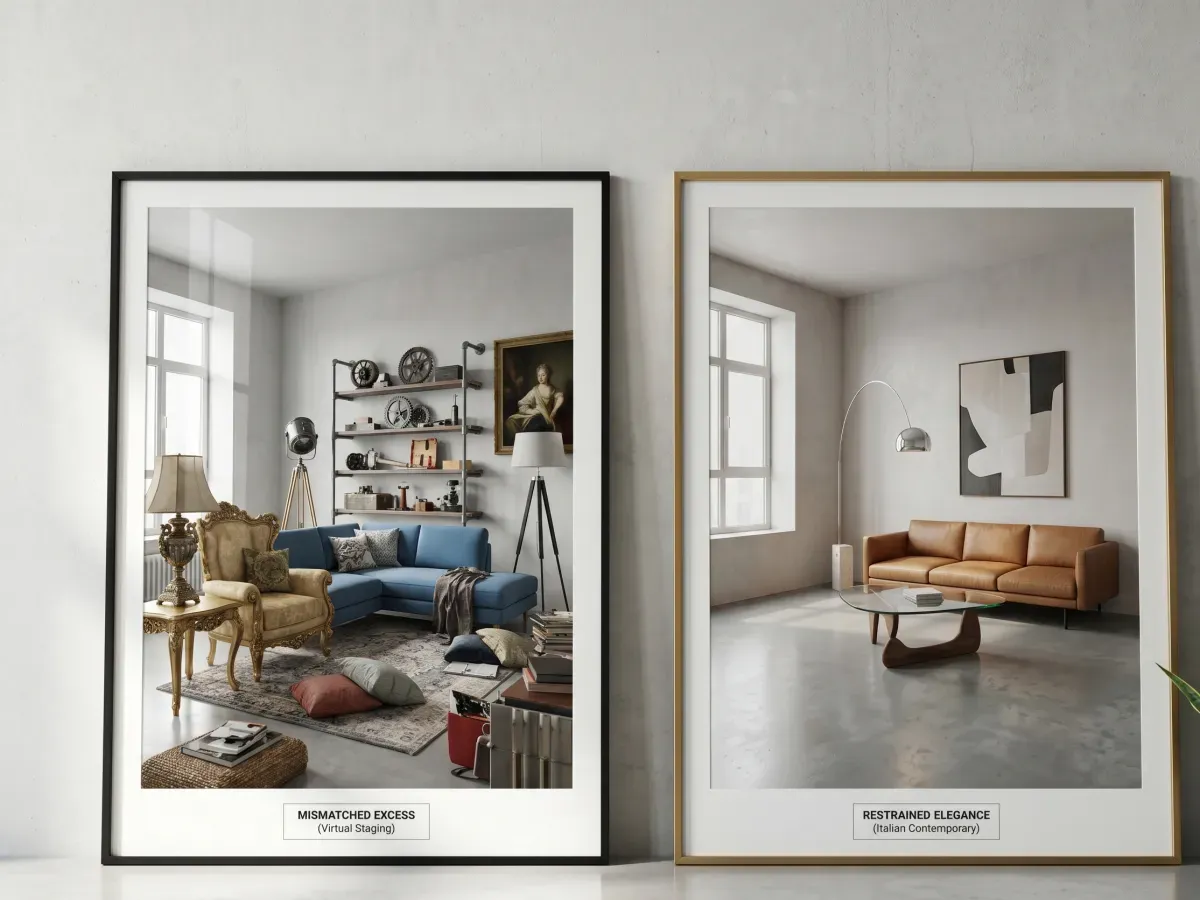
- Keep the style consistent — don't mix classic Italian with Scandinavian industrial in the same property. Pick an aesthetic and apply it across all rooms.
- Clearly label all virtual-staged images in the caption. Don't cheat. Transparency pays off.
- Always include 2-3 «empty» photos of the actual property alongside the staged versions. The buyer sees both realities.
The near future
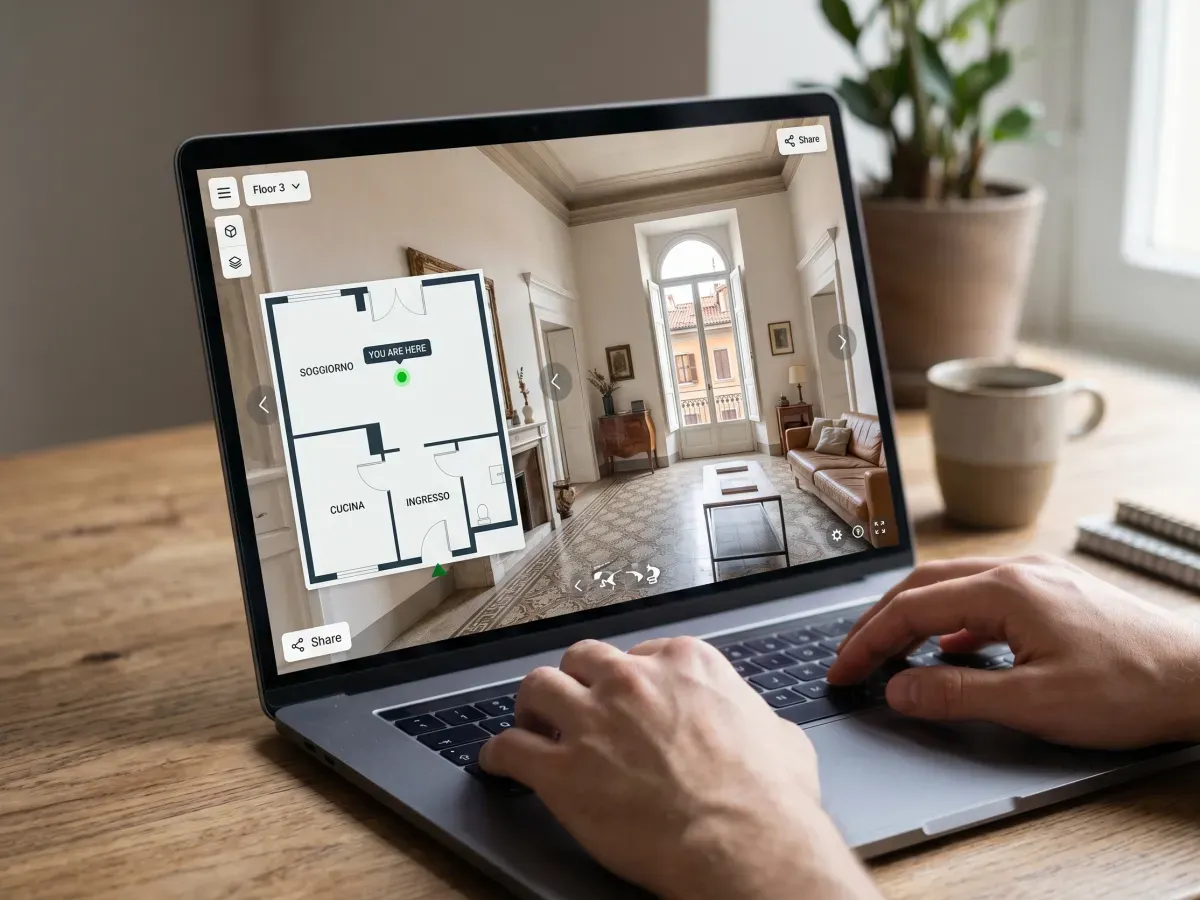
In 12-18 months we'll hear about interactive virtual walkthroughs — the buyer «walks» through staged rooms via browser, with the option to change furniture or style in real time. A few services (Matterport, Eyespy360) are nearly there. For now, static photos done well remain the bread and butter.
On our site you'll find real examples of properties in Como, Cernobbio and Argegno where virtual staging was part of the sale strategy. If you want to understand whether it makes sense for your specific property, start with an AI valuation — in 2 minutes we know the current value and the upside.
Want to know if virtual staging makes sense for your property?
Start with Refit.space's AI valuation — in 2 minutes you'll see the current value and upside scenarios with and without preparation.